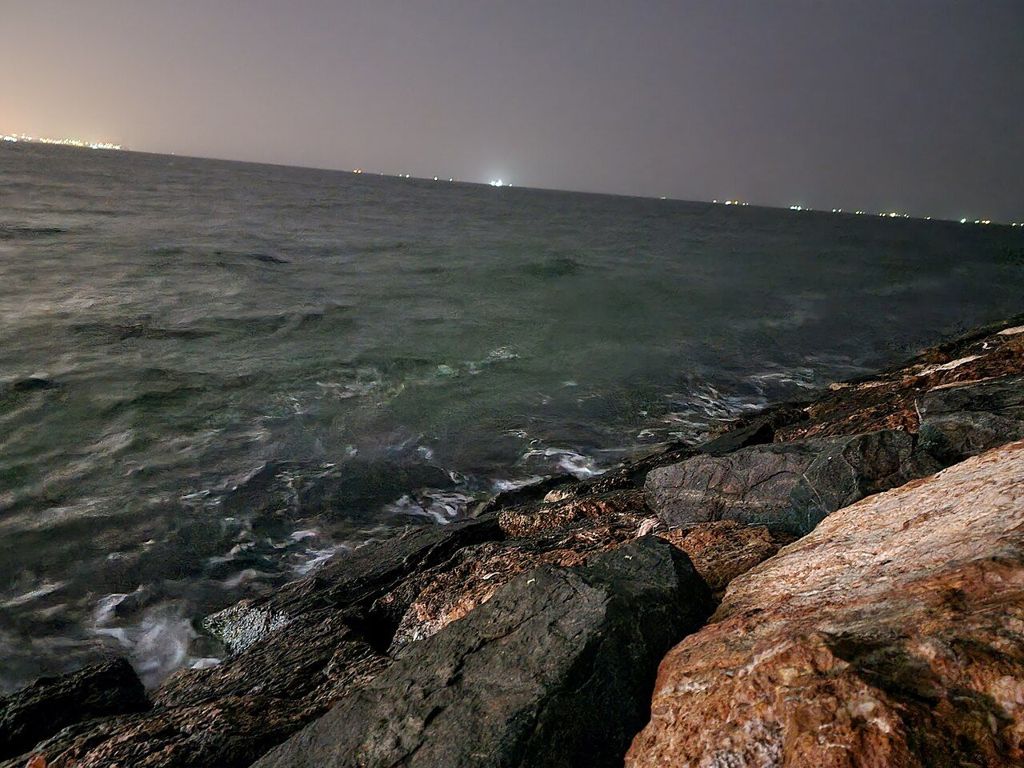
A long, open beach runs along the edge of the city, with a promenade above it. It is at its best in the last hour of daylight, when families come down to the sand.
Ajman's beach runs for several kilometres along the Gulf, from the border with Sharjah in the south towards the creek and beyond. Above it, a paved promenade with palms, lamp posts and benches follows the shore, and on the other side of the road stand apartment towers and hotels. By day in summer it can be almost empty. In the late afternoon and evening, especially at weekends and through the cooler months, it fills with families, joggers, football games on the sand and people simply sitting and looking at the sea.
It is not a wild beach, and it does not try to be. What it offers is space, a soft sandy shore that shelves gently into calm water, and a relaxed public atmosphere that many visitors to the larger cities nearby never see.
The promenade and the sand
The walk along the promenade is flat and easy, with a low wall between the path and the beach. Shaded seating, playgrounds and small kiosks appear at intervals. The sand is wide enough that even busy evenings rarely feel crowded, and you can walk down to the waterline almost anywhere.
As the light fades, the sky over the water often turns orange and pink, with the haze over the Gulf softening the sun into a disc. The towers of Sharjah and Dubai rise to the south along the curve of the coast. After dark, the lamps along the promenade come on and the beach stays lively well into the evening, especially from autumn to spring.
The creek and the working shore
To the north, the beach ends at the mouth of Ajman Creek, an inlet that runs inland past the port area and the older parts of the city. Breakwaters made of large rocks guard the entrance. The creek side is a different world from the beach: fishing boats, workshops and the dhow-building yard where wooden boats are still built. A walk or short drive from one to the other gives you both faces of the city's relationship with the sea.
Beyond the creek, the shore continues towards the Al Zorah mangroves, a protected lagoon where the green edge of the coast comes back into view.
Another note: The Al Zorah mangroves
Swimming sense in the heat
The water off Ajman is usually calm, shallow near the shore and warm for most of the year. From roughly May to October it becomes very warm indeed, close to body temperature at the height of summer, and it offers little relief from the heat. Midday sun on the sand at that time of year can cause heat exhaustion quickly, even in the water.
- Swim near lifeguard towers where they are staffed, and follow any flags or signs.
- Avoid the water near the creek mouth and the breakwaters, where currents and boat traffic are stronger.
- Jellyfish appear at times; if people are leaving the water, find out why.
- In summer, swim early in the morning or in the evening, not in the middle of the day.
- Drink often, and rest in shade between swims.
Winter water is still pleasant by northern European standards, and the cooler months are the best time for a long beach day.
Dress and manners on the beach
Swimwear is normal on the beach itself, and nobody will look twice at an ordinary swimsuit on the sand. Cover up when you leave the beach for the promenade, the road or any shop or restaurant: a shirt and shorts or a light dress is enough. Very revealing swimwear and nudity, including topless sunbathing, are not acceptable on public beaches in the UAE.
Many families come down together in the evenings, and some women swim fully dressed. Be discreet with cameras, and never photograph people, particularly women and children, without asking first. Public displays of affection beyond holding hands are frowned upon. During Ramadan the beach is quieter by day and comes alive after the evening meal; avoid eating or drinking in public before sunset in that month.
Timing your evening
Fridays and Saturdays are the busiest evenings. On weekdays the beach is calmer, and in the hottest part of summer it can be close to empty until after dark. The light is softest in the last hour before sunset, and it is also when the sand cools enough to walk on barefoot.
Pair a late afternoon at the beach with a morning at the Ajman Museum in the old fort, which is a short distance inland. Between the two, you can see most of what the coastal city has to offer in one unhurried day.
What to bring
Keep it simple: sandals, a towel, sunscreen, a hat for the daytime and water. A light layer helps on winter evenings, when a breeze off the sea can feel cool after dark. Public toilets and showers exist at points along the beach, though not everywhere, and the kiosks sell drinks and snacks. Leave valuables at home or keep them on you; the beach is generally safe, but there is little point in tempting anyone.
Parking along the beach road fills up on weekend evenings, and taxis are plentiful and inexpensive in the city, so many people simply take one down to the sand and another back. If you do drive, look for marked public bays and avoid stopping on the road itself. Children love the open sand and the playgrounds, but the shallow water near the shore can still knock a small child over when a boat wake rolls in, so keep them within reach.
On the day
- Best time: The hour before sunset, cooler months
- From the city: Taxi to the beach road
- Bring: Sandals, light cover-up, sunscreen, a bottle of water