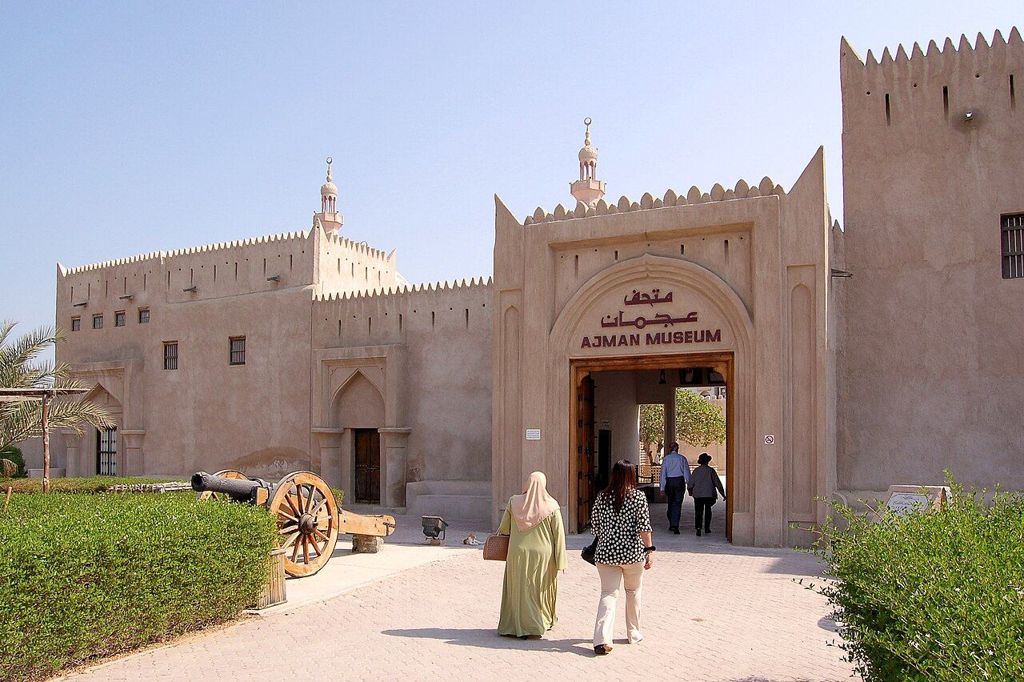
The emirate's fort has been a ruler's home, a police post and now a museum. Its rooms on pearling, fishing and daily life make a good first stop in town.
The Ajman Museum sits inside the emirate's old fort, a short way back from the sea in the oldest part of town. Pale walls with stepped crenellations, a square watchtower and a tall wind tower make it easy to spot among the low modern buildings around it. The fort dates from the late 18th century, and it has had several lives since then: home and seat of the ruling family for most of its history, then a police headquarters, and finally a museum.
It is a small place compared with the large museums in Abu Dhabi and Dubai, and that is its strength. You can see the whole collection in an unhurried hour or two, and the building itself tells you as much as the displays inside it.
The fort and its towers
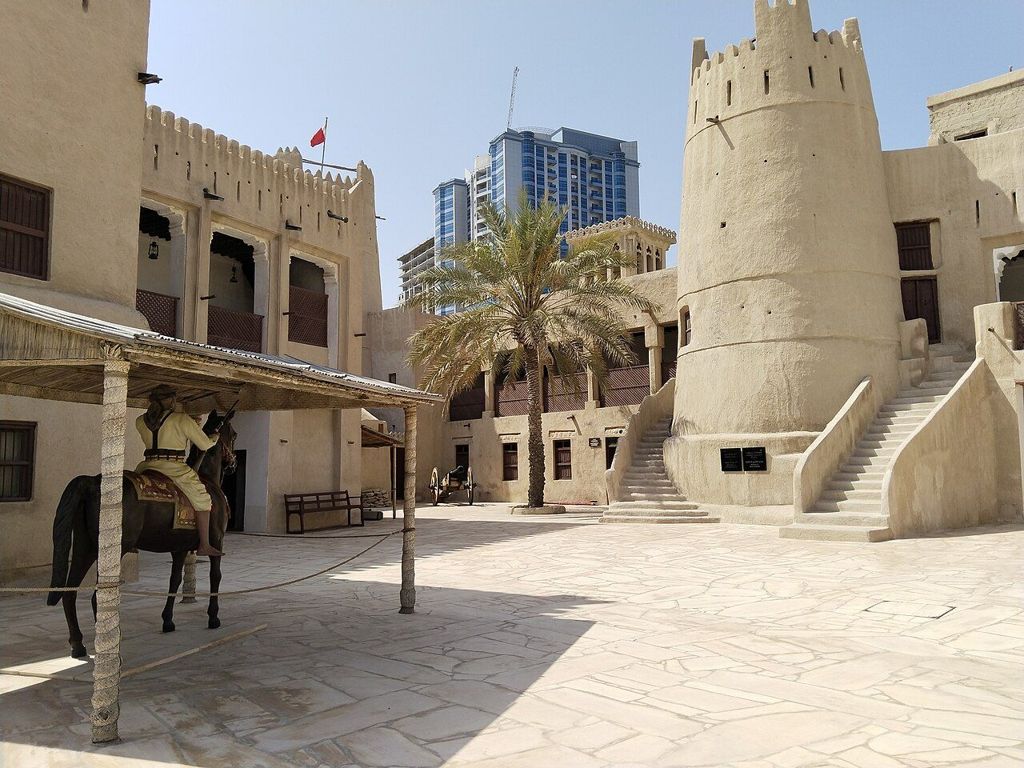
You enter through an arched gateway set into the outer wall, with old cannons on wheeled carriages placed on the lawns outside. Inside is an open courtyard, with rooms opening off it on two levels. The thick walls were built from coral stone and beach rock bound with lime and gypsum, the standard materials along this coast before concrete arrived, and they keep the rooms noticeably cooler than the courtyard at midday.
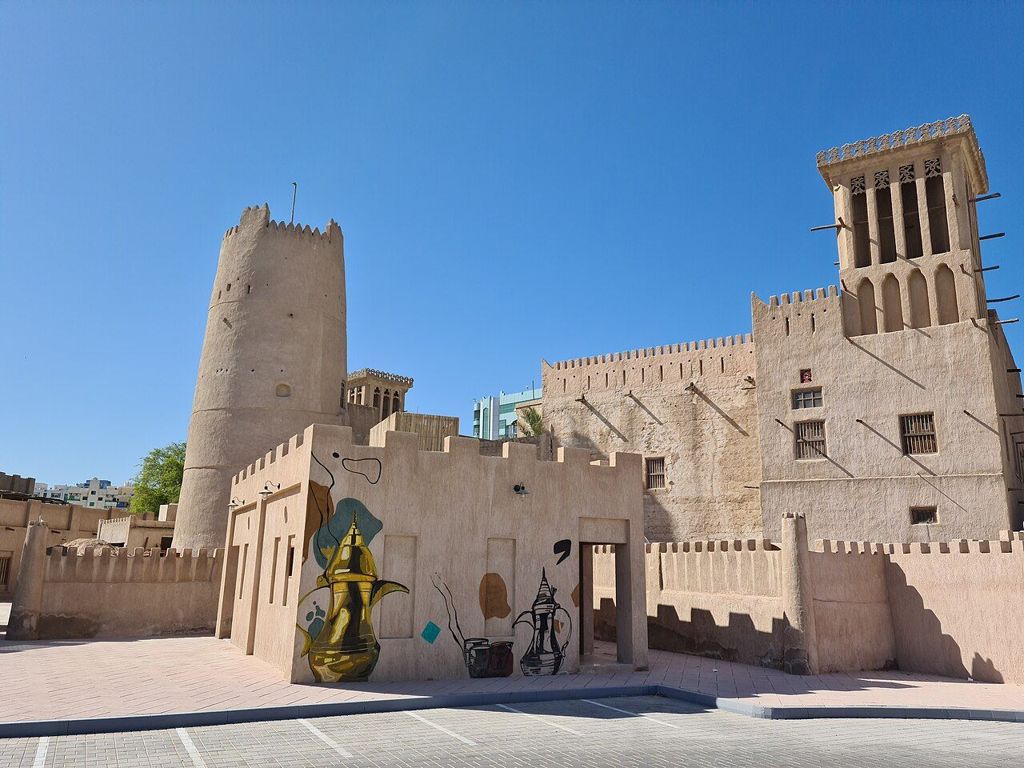
Look up at the wind tower, called a barjeel in the Gulf. Its open sides catch breezes from any direction and send the air down into the room below, an old and effective answer to summer heat. The watchtower nearby gave guards a view over the town, the shore and the approaches from inland. Climbing parts of the fort is sometimes possible and sometimes not; staff at the entrance will tell you which stairs are open.
Pearling, fishing and the sea
For most of Ajman's history, the sea paid the bills. The museum gives good space to pearl diving and fishing, with displays of the simple tools divers used: a nose clip, a weighted rope to carry them down, a basket for oysters and the small brass scales and sieves that merchants used to grade pearls by size. Models and boat sections show the wooden dhows that carried crews to the banks each summer. If the subject draws you in, the note on pearl diving before oil goes further into how a season worked.
Fishing has its own rooms, with nets, traps woven from palm and wire, and the gear used along the shore for generations. Some of these crafts still go on in Ajman today, and you can see a modern version of the old trade at the dhow-building yard by the creek.
Another note: Pearl diving on the Gulf coast before oil
Daily life, manuscripts and archaeology
Other rooms recreate parts of a traditional home: a majlis for receiving guests, with cushions along the walls and coffee pots set out; a kitchen; a bedroom with a carved wooden chest. There are displays on traditional medicine, weapons, jewellery and dress, and on the palm tree, which supplied food, rope, matting and building material for every household on this coast.
A section on archaeology covers finds from sites in the emirate, including pottery and grave goods thousands of years old, a reminder that people lived and traded here long before the fort went up. Old manuscripts and documents add a quieter note, and a reconstructed market street shows small shops of the kind that once lined the lanes nearby.
The old town around the fort
Ajman grew up along the shore and the creek, and the streets around the museum are the closest thing the city has to an old quarter, although most of the buildings are modern. A short walk takes you towards the beach and the Ajman corniche, where the evening crowd gathers once the heat drops. In the other direction, small streets lead towards the creek and the working waterfront.
Plan the walk for the cooler part of the day. Shade is limited on many streets, and from late spring to early autumn the middle hours are simply too hot for comfortable walking. A morning visit to the museum followed by a slow lunch indoors, then the corniche at sunset, makes a sensible day.
Hours, Ramadan and photographs
The museum is usually open daily, with shorter or later hours on Fridays and during Ramadan. Entry is cheap by regional standards. Hours shift around public holidays as well. Photography of the building and most displays is generally allowed; ask staff if you are unsure about a particular room.
Dress as you would for any public building in the UAE: shoulders and knees covered for both men and women. You do not need to cover your hair. During Ramadan, eating, drinking and smoking in public during daylight hours are not acceptable, so keep water out of sight between rooms and drink somewhere private.
- Allow one to two hours for the museum.
- Go early in the day, when the courtyard is shaded and rooms are quiet.
- Combine it with a walk to the shore, or with a drive inland to Masfout and Manama on another day.
Why the fort matters
Ajman is the smallest of the seven emirates by area, and it is easy to pass through on the way between Sharjah and the northern emirates without stopping. The fort is the best reason to pause. Standing in its courtyard, with the wind tower above you and the sound of traffic muffled by the walls, you get a clear sense of how compact and sea-facing life on this coast once was, and how fast it changed once oil money reached the region in the second half of the 20th century.
The displays are labelled in Arabic and English, and the scale is manageable even with children. If you only have one morning in Ajman, spend it here and at the beach a few minutes away.
On the day
- Best time: Morning, before the midday heat
- From the city: Taxi or short walk from the corniche
- Bring: Light scarf, water, modest clothes, a little cash